
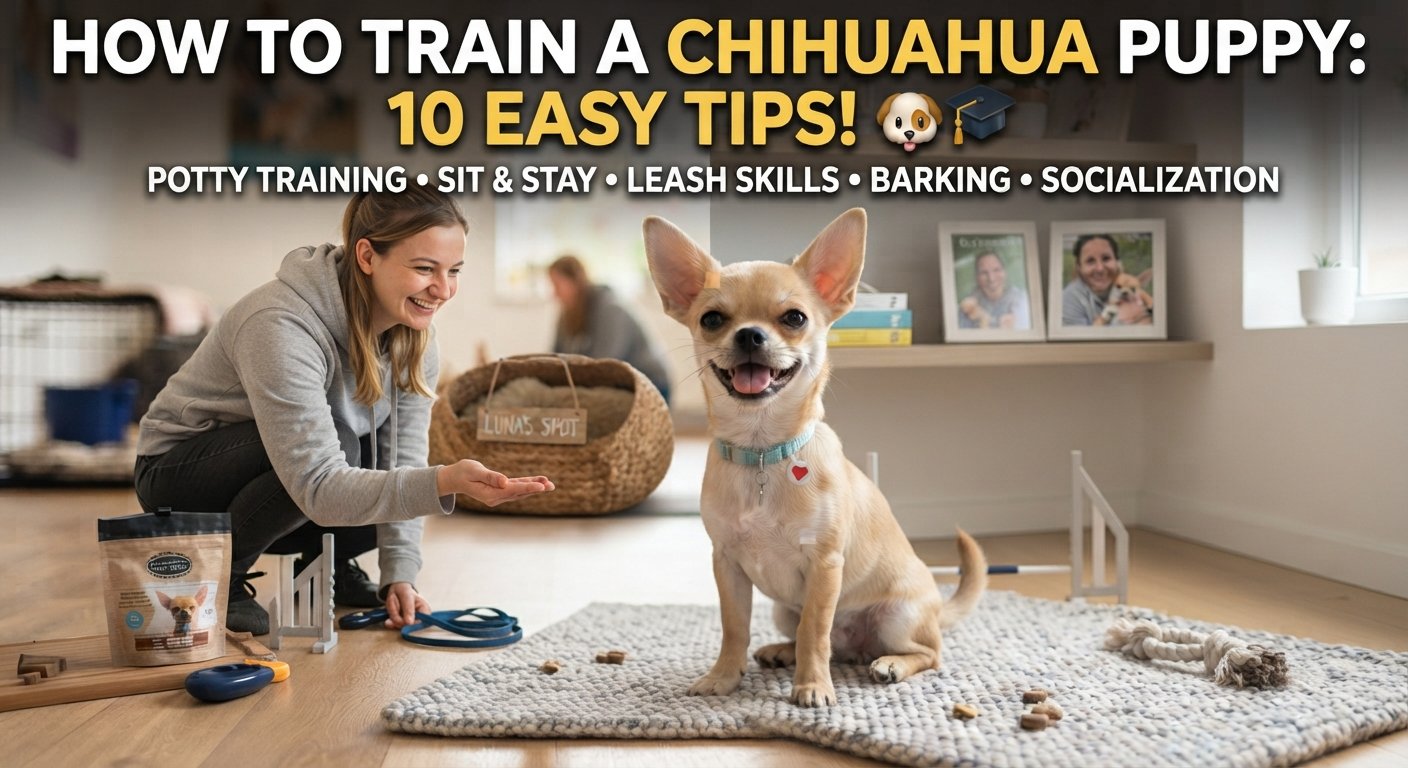
How to Train a Chihuahua Puppy: 10 Easy Training Tips 🐶🎓
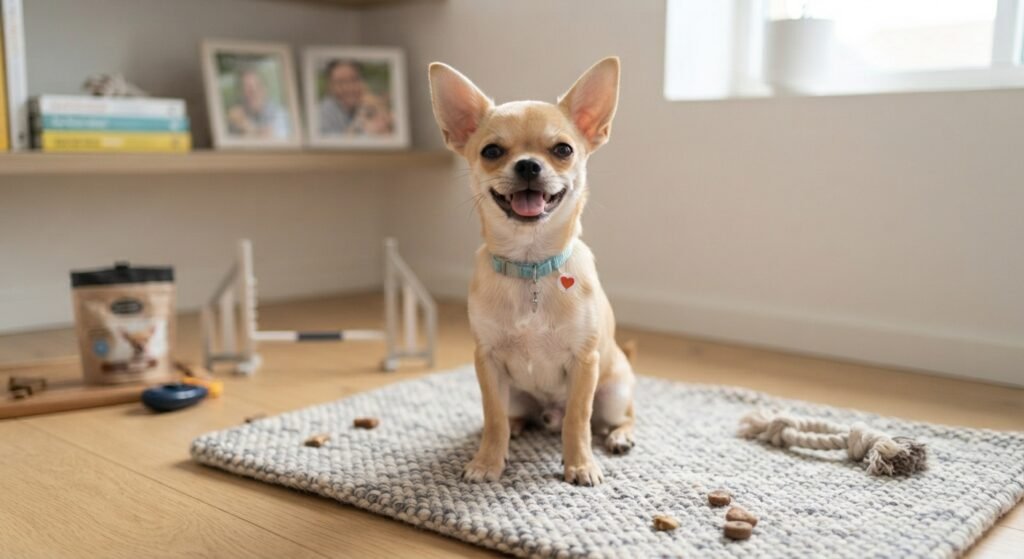
Learning how to train a Chihuahua puppy is an important part of raising a happy and well-mannered companion. If you are wondering how to train a Chihuahua puppy, the best approach is to start with simple commands, short sessions, positive rewards, and a consistent routine. Chihuahua puppy training can be enjoyable when you make learning feel like a game. With patience and regular practice, your puppy can learn good manners, basic commands, calm behavior, and important household rules. This guide explains how to train a Chihuahua puppy step by step, including potty training, name training, leash skills, socialization, barking, and common puppy behaviors.
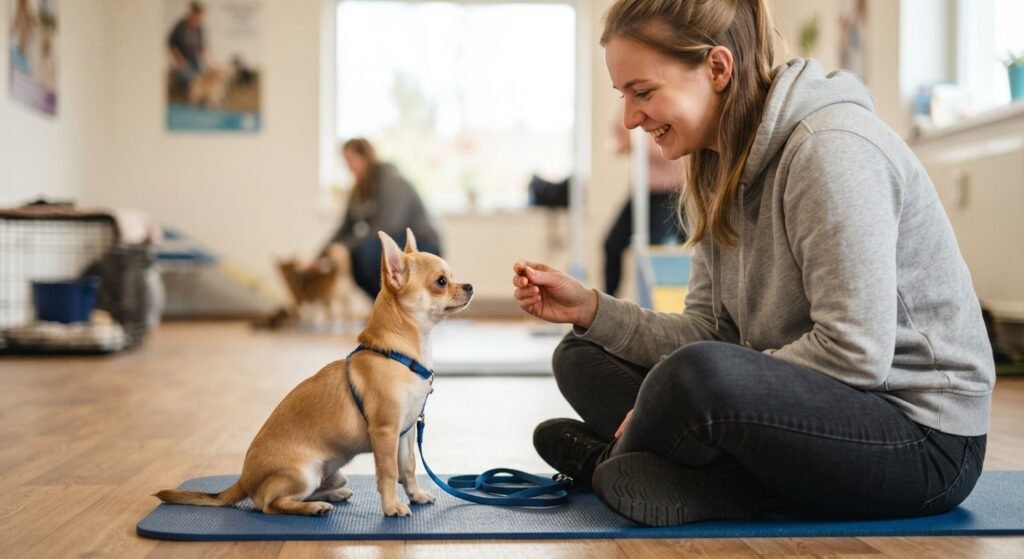
Chihuahuas are small dogs with plenty of personality.
They can be alert, intelligent, playful, and very attached to their families. Therefore, early training is valuable.
However, training a Chihuahua puppy should not be harsh.
Your puppy is still learning about the world.
Instead, focus on patience and repetition.
Keep lessons short. Use rewards. Give clear instructions. Most importantly, stay consistent.
When everyone in the household follows the same rules, your puppy can learn much faster.
🐾 Why Should You Train a Chihuahua Puppy?
Training gives your puppy structure.
It also helps you communicate.
For example, your Chihuahua can learn that “sit” means placing their bottom on the floor. They can learn that coming when called is important. They can also learn where to potty and how to behave around people.
Good training can help with:
-
Basic obedience
-
Potty training
-
Leash walking
-
Socialization
-
Barking
-
Jumping
-
Chewing
-
Recall
-
Calm behavior
-
Household manners
Training also provides mental stimulation.
Your Chihuahua does not need long training sessions.
Instead, several short sessions throughout the day can be very effective.
🎓 Start Chihuahua Puppy Training Early
You do not need to wait until your puppy is older.
Begin with simple lessons once your puppy has settled into the home.
Start with their name.
Then move to simple commands.
Good first commands include:
-
Sit
-
Come
-
Stay
-
Down
-
Leave it
-
Wait
-
Drop it
Keep each lesson simple.
For example, practice one command several times. Then stop while your puppy is still interested.
This keeps training positive.
Keep Training Sessions Short
Puppies have short attention spans.
Therefore, a five-minute session can be more useful than a long lesson that leaves your puppy tired or frustrated.
You can practice during normal daily activities.
For example:
Before meals → Sit
Before going outside → Wait
During play → Drop it
During walks → Come
This turns everyday life into a learning opportunity.
🧡 Use Positive Reinforcement
Positive reinforcement is one of the easiest ways to encourage good behavior.
When your Chihuahua does something correctly, reward them.
Rewards can include:
-
Small treats
-
Praise
-
Gentle affection
-
A favorite toy
-
Playtime
For example:
You say “Sit.”
Your puppy sits.
You immediately say “Good!”
Then give a small reward.
Over time, your puppy begins to connect the command with the desired behavior.
Why Timing Matters
Reward the behavior as soon as possible.
If you wait too long, your puppy may not understand what earned the reward.
Therefore, good timing can make training clearer.
🐶 10 Easy Chihuahua Puppy Training Tips
Now let’s look at ten practical training tips that you can use at home.
1. Teach Your Chihuahua Their Name
Start with your puppy’s name.
Say the name in a happy voice.
When your puppy looks toward you, reward them.
Repeat this several times throughout the day.
Soon, your puppy can begin to understand that their name means you want their attention.
Simple Name Game
Try this:
Say name → Puppy looks at you → Praise → Reward
Keep the exercise short.
Do not repeatedly say the name when your puppy is ignoring you.
Instead, make the name associated with positive experiences.
2. Teach “Sit”
“Sit” is one of the easiest commands to begin with.
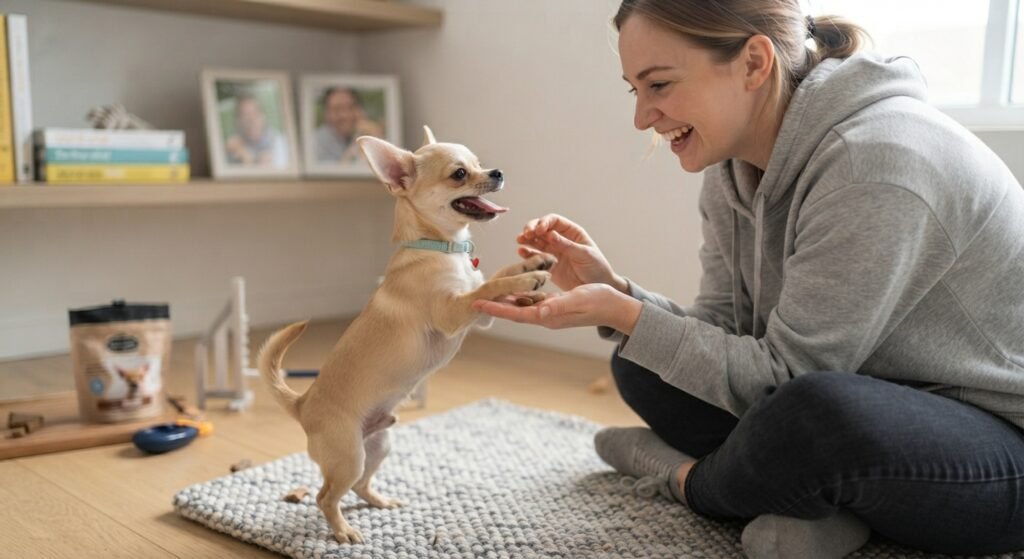
Hold a small treat near your puppy’s nose.
Slowly move the treat upward.
As your puppy follows it, their bottom may naturally move toward the floor.
When they sit, say:
“Sit.”
Then praise and reward.
Repeat several times.
Do not push your puppy’s body into position.
Let them learn the movement naturally.
3. Teach “Come”
Teaching your Chihuahua to come when called is extremely important.
Start indoors in a safe area.
Move a short distance away.
Say your puppy’s name followed by:
“Come!”
Use an enthusiastic voice.
When your puppy comes toward you, reward them immediately.
Never Punish Your Puppy for Coming
This is important.
If your puppy finally comes to you after ignoring the command, do not punish them.
You want your puppy to learn that coming to you is always safe and positive.
This can become especially important as your puppy grows.
4. Teach “Stay”
Once your puppy understands “sit,” begin introducing “stay.”
Ask your puppy to sit.
Then hold your hand out and say:
“Stay.”
Wait for a very short period.
Then reward.
Gradually increase the time.
Later, increase the distance.
Do not rush.
Your Chihuahua needs to understand each stage before moving to the next one.
5. Teach “Leave It”
“Leave it” can help prevent your puppy from picking up unsafe objects.
Start with something uninteresting.
Hold it in your closed hand.
When your puppy stops trying to reach it, reward them with something better.
Gradually practice with different objects.
This command can become useful around:
-
Food
-
Toys
-
Small objects
-
Household items
-
Outdoor objects
However, training should never replace supervision.
6. Teach Your Chihuahua Not to Bite During Play
Puppies naturally explore with their mouths.
They may also bite or chew during play.
That does not mean your puppy is aggressive.
Instead, teach appropriate play behavior.
If your puppy bites your hands, calmly redirect them toward an appropriate toy.
For example:
Hand → Stop play → Offer toy → Praise appropriate play
Avoid encouraging rough hand play.
If everyone in the household follows the same rule, your puppy receives a clearer message.
7. Continue Potty Training
Training does not stop with obedience.
Potty training is another major skill.
Take your Chihuahua to the appropriate potty area regularly.
Important times include:
-
After waking
-
After eating
-
After drinking
-
After playing
-
After naps
-
Before bedtime
Reward successful potty trips.
The more consistent your routine is, the easier it can be for your puppy to understand what you expect.
8. Teach Calm Leash Walking
Your Chihuahua may be tiny.
However, leash training is still important.
Begin indoors or in another safe area.
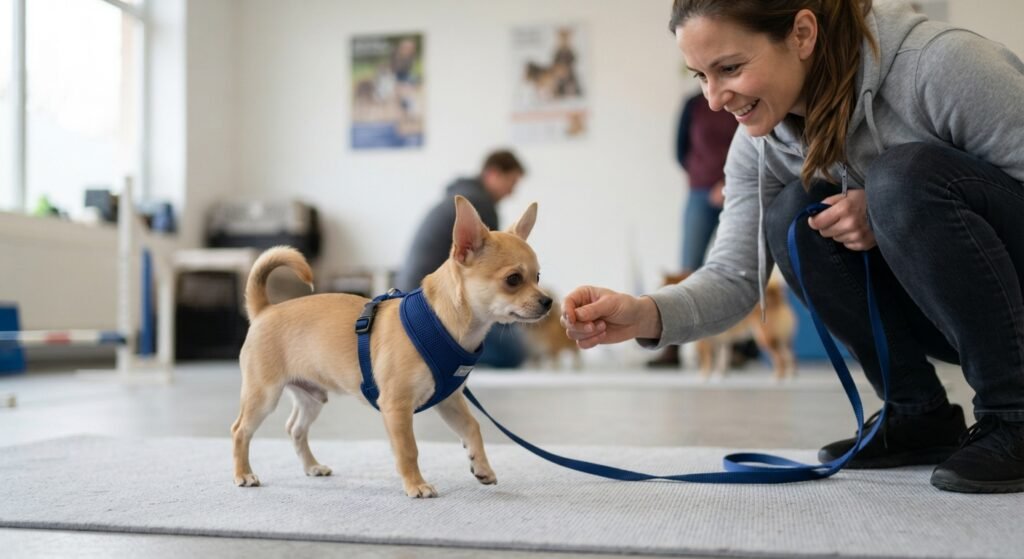
Allow your puppy to become comfortable wearing an appropriate harness or collar.
Then introduce the leash.
Reward calm behavior.
Avoid dragging your puppy.
Instead, encourage them to follow you.
Why a Harness Can Be Useful
Some owners prefer a harness for small dogs.
A properly fitted harness can provide another option for walking and handling.
However, the equipment should fit comfortably and be introduced gradually.
🌎 Socialize Your Chihuahua Puppy
Training and socialization work together.
Your Chihuahua should gradually experience new sights, sounds, people, environments, and appropriate dogs.
However, socialization does not mean forcing your puppy into unfamiliar situations.
Instead, introduce new experiences slowly.
For example:
At Home
Introduce:
-
Household sounds
-
Different surfaces
-
Gentle handling
-
Grooming
-
Visitors
Outside
When appropriate and consistent with your veterinarian’s advice, introduce:
-
Safe outdoor environments
-
Car rides
-
New sights
-
New sounds
-
Friendly, suitable dogs
Keep experiences positive.
If your puppy becomes frightened, create more distance and try again later.
🐕 Training a Chihuahua Around Other Dogs
Chihuahuas are small.
Therefore, interactions with larger dogs require extra care.
Even a friendly large dog can accidentally injure a tiny puppy during rough play.
Always supervise interactions.
Choose calm and appropriate playmates.
Do not force your Chihuahua to interact with every dog they meet.
Your goal is confidence, not constant social interaction.
🔊 How to Train a Chihuahua Puppy Not to Bark
Barking is normal communication for dogs.
Chihuahuas can be alert and may bark when they notice unfamiliar sounds, people, animals, or activity.
Therefore, simply shouting “Stop!” may not solve the problem.
First, identify why your puppy is barking.
Your Chihuahua may be:
-
Alerting you
-
Excited
-
Frightened
-
Seeking attention
-
Frustrated
-
Overstimulated
Once you know the reason, you can address the behavior.
Reward Quiet Behavior
When your Chihuahua is calm and quiet, reward them.
This teaches your puppy that calm behavior can also receive attention.
Avoid turning barking into a competition where you shout while your puppy barks.
Instead, remain calm.
🧸 Manage Chewing
Puppies explore their environment with their mouths.
Therefore, chewing is normal.
Your job is to teach your puppy what they can chew.
Provide safe, puppy-appropriate toys.
If your puppy starts chewing something they should not, calmly redirect them.
The Redirection Method
Wrong object → Interrupt calmly → Offer toy → Praise
Do this consistently.
Over time, your puppy can learn which items are appropriate.
Also, keep valuable or dangerous objects out of reach.
🏡 Teach Household Rules
Your Chihuahua should learn the rules of your home.
For example, decide:
-
Can the puppy sleep on furniture?
-
Which rooms are allowed?
-
Where should the puppy sleep?
-
Where should the puppy eat?
-
Where should the puppy potty?
-
Which objects are off-limits?
Then make sure everyone follows the same rules.
If one person allows a behavior while another person punishes it, your puppy may become confused.
Consistency makes learning easier.
💤 Teach Your Chihuahua to Settle
A well-trained puppy should not be expected to play all day.
Rest is important.
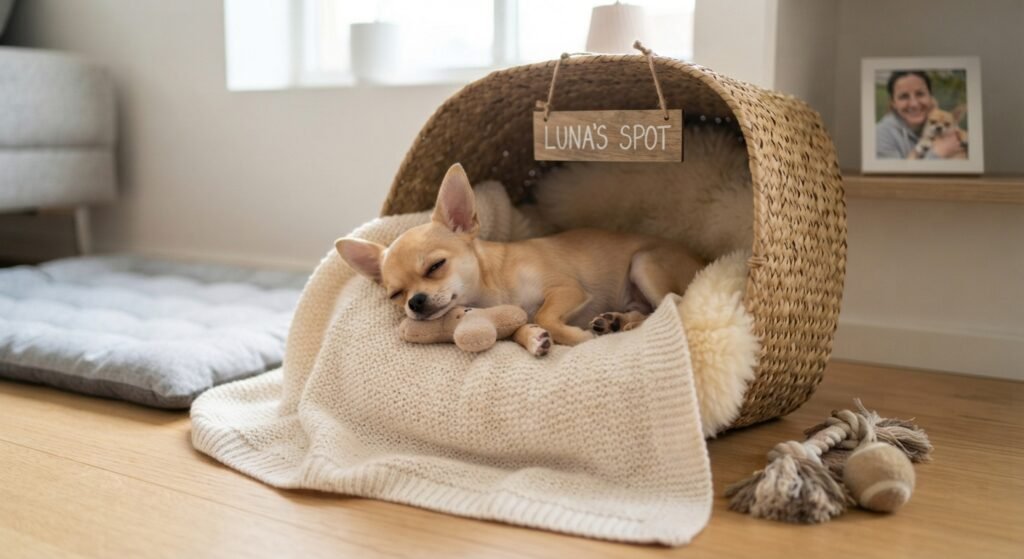
Create a quiet area where your puppy can relax.
After play or training, encourage calm time.
You can give your puppy an appropriate toy and allow them to settle.
This teaches an important lesson:
Playtime ends. Calm time begins.
This can help your puppy develop better household manners.
🧠 Use Everyday Activities as Training
You do not need special equipment.
Daily activities can become training opportunities.
For example:
| Everyday Moment | Training Opportunity |
|---|---|
| Before food | Sit |
| Before opening door | Wait |
| During play | Drop it |
| Calling puppy | Come |
| Going outside | Calm behavior |
| Grooming | Stay calm |
| Returning home | Sit and settle |
This makes training part of your normal routine.
As a result, your puppy gets more practice without needing long sessions.
🐶 Training a Teacup Chihuahua Puppy
Many people search for how to train a Teacup Chihuahua puppy.
However, the same basic training principles apply to very small Chihuahuas.
Because smaller puppies can be physically delicate, handling should be especially gentle.
Avoid rough play.
Avoid jumping from high furniture.
Also, supervise interactions with children and larger animals.
Training should focus on confidence, safety, communication, and good behavior.
👨👩👧 Teach Children How to Interact With Your Puppy
Children should learn that a Chihuahua is not a toy.
A puppy needs gentle handling.
Teach children to:
-
Approach calmly
-
Avoid grabbing
-
Avoid pulling ears or tails
-
Avoid chasing
-
Avoid disturbing the puppy while eating
-
Give the puppy space while sleeping
-
Ask an adult before picking up the puppy
Always supervise young children around puppies.
This protects both the child and the dog.
🚫 Training Mistakes to Avoid
Some training methods can make learning harder.
Do Not Hit Your Puppy
Physical punishment can create fear.
Do Not Yell Constantly
Your puppy may become confused or stressed.
Do Not Expect Instant Results
Learning takes repetition.
Do Not Train for Too Long
Short sessions are often easier for puppies.
Do Not Change Rules Constantly
Consistency matters.
Do Not Reward Unwanted Behavior
Be careful about giving attention when your puppy is demanding it through unwanted behavior.
Instead, reward calm behavior whenever possible.
📅 Example Chihuahua Puppy Training Schedule
You can include short lessons throughout the day.
| Time | Training |
|---|---|
| Morning | Name + potty |
| After breakfast | Sit |
| Mid-morning | Come |
| Afternoon | Leave it |
| After play | Potty |
| Evening | Leash practice |
| Before bed | Calm behavior |
You do not need to follow this exact schedule.
Instead, adapt it to your puppy’s age and daily routine.
The important thing is regular practice.
📈 How to Know Your Chihuahua Is Improving
Progress may happen gradually.
Look for small improvements.
Your puppy may:
-
Respond to their name faster
-
Sit more consistently
-
Come when called indoors
-
Wait before meals
-
Have fewer accidents
-
Walk more calmly
-
Bark less in certain situations
-
Settle more easily
-
Follow household rules
Celebrate these small wins.
They show that your puppy is learning.
🩺 When to Ask for Professional Help
Some behaviors may require help from a qualified professional.
Consider speaking with your veterinarian or an appropriately qualified positive-reinforcement trainer if your puppy:
-
Shows persistent fear
-
Displays serious aggression
-
Guards food intensely
-
Cannot settle
-
Has severe separation-related behavior
-
Suddenly changes behavior
-
Shows signs of pain or illness
A sudden behavior change can sometimes have a medical cause.
Therefore, veterinary advice is important when behavior changes unexpectedly.
🐾 Combine Training With Good Puppy Care
Training works best when it is part of a complete routine.
Your Chihuahua also needs appropriate nutrition, rest, exercise, grooming, socialization, and veterinary care.
Nutrition also matters.
When these topics work together, your Chihuahua gets a more complete foundation for growing into a confident companion.
📝 Chihuahua Puppy Training Checklist
Use this checklist as your puppy learns:
☐ Teach your puppy their name
☐ Practice sit
☐ Practice come
☐ Practice stay
☐ Practice leave it
☐ Redirect inappropriate chewing
☐ Continue potty training
☐ Introduce leash skills
☐ Practice calm behavior
☐ Socialize gradually
☐ Reward good behavior
☐ Keep sessions short
☐ Stay consistent
☐ Avoid harsh punishment
☐ Supervise interactions
🌟 10 Training Rules to Remember
If you remember nothing else, remember these ten rules:
-
Start early.
-
Keep training positive.
-
Use short sessions.
-
Reward good behavior.
-
Be consistent.
-
Use simple commands.
-
Avoid physical punishment.
-
Supervise your puppy.
-
Practice every day.
-
Be patient.
Training is a process.
Your puppy does not need to become perfect overnight.
❤️ Final Thoughts: How to Train a Chihuahua Puppy
Learning how to train a Chihuahua puppy can be one of the most rewarding parts of puppy ownership.
Start with simple commands.
Then build gradually.
Use positive rewards.
Keep sessions short.
Stay patient.
Also, remember that your Chihuahua is an individual. Some puppies learn quickly. Others need more repetition.
Do not compare your puppy with another dog.
Instead, celebrate progress.
A successful training routine is built through small lessons repeated consistently.
With time, patience, and plenty of positive reinforcement, your Chihuahua can learn valuable skills that make everyday life safer and more enjoyable for both of you. 🐶❤️
If you are preparing to welcome a Chihuahua puppy into your family, continue exploring Chihuahua Hub for puppy-care information and available Chihuahua puppies.
[View Available Chihuahua Puppies]
❓ Frequently Asked Questions About Chihuahua Puppy Training
When should I start training my Chihuahua puppy?
You can begin simple, age-appropriate training once your puppy has settled into your home. Start with basic skills such as name recognition, attention, and simple commands.
Are Chihuahuas easy to train?
Chihuahuas are intelligent dogs and can learn many behaviors. However, every puppy is different. Patience, consistency, and positive reinforcement are important.
How long should Chihuahua puppy training sessions be?
Keep sessions short and positive. Several brief sessions can be more effective than one long session for a young puppy.
How do I teach my Chihuahua to sit?
Use a small reward to guide your puppy’s attention upward. When their bottom naturally moves toward the floor, introduce the “sit” command and reward the behavior.
How do I stop my Chihuahua from biting?
Redirect biting toward an appropriate toy. Avoid encouraging rough hand play, and consistently reward gentle behavior.
How do I train my Chihuahua not to bark?
First identify why your puppy is barking. Then work on the cause and reward calm behavior. Avoid simply shouting at your puppy.
Should I punish my Chihuahua for bad behavior?
Avoid physical punishment and harsh treatment. Instead, redirect unwanted behavior and reward appropriate behavior.
How do I train a Chihuahua puppy to walk on a leash?
Introduce a properly fitted harness or collar gradually. Let your puppy become comfortable with it before practicing short, calm walks.
How do I socialize my Chihuahua puppy?
Gradually expose your puppy to appropriate people, sounds, environments, handling, and suitable dogs. Keep experiences positive and follow your veterinarian’s guidance about safe exposure.
How long does Chihuahua puppy training take?
There is no exact timeline. Puppies develop at different speeds. Regular practice and consistency can help your Chihuahua make steady progress.
🐶 About Chihuahua Hub
Chihuahua Hub is dedicated to helping families learn more about Chihuahua puppies and responsible puppy care.
Our resources cover important topics such as Chihuahua puppy nutrition, potty training, training, socialization, grooming, and everyday care.
You can also explore Chihuahua puppies in different categories, including Teacup, Standard, Short Coat, and Long Coat Chihuahuas.
This article provides general educational information and is not a substitute for professional veterinary or qualified dog-training advice. If your puppy shows sudden behavior changes, severe fear, aggression, or other concerning signs, speak with your veterinarian.