How to Potty Train a Chihuahua Puppy: Easy Step-by-Step Guide 🐶🏡
Learning how to potty train a Chihuahua puppy can feel challenging at first. However, with patience, consistency, and a clear routine, Chihuahua puppy potty training can become much easier. If you are wondering how to potty train a Chihuahua, the most important steps are simple: create a routine, choose one potty area, watch your puppy closely, reward good behavior, and stay consistent. This guide explains how to potty train a Chihuahua puppy step by step, including what to do when accidents happen and how to help your puppy develop good bathroom habits.
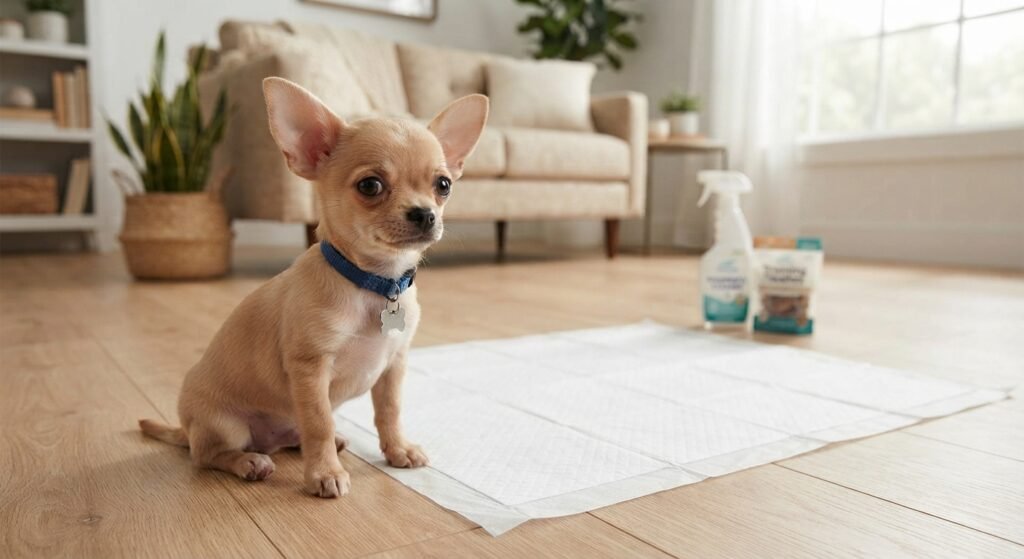
A new Chihuahua puppy has a lot to learn.
Your puppy is learning where to sleep, where to eat, how to play, who their family is, and what is expected inside the home. Potty training is simply another skill your puppy needs to learn.
Therefore, do not expect perfection immediately.
Instead, focus on creating a predictable routine.
With time, your puppy will begin to understand where you want them to go.
🐾 Why Is Chihuahua Puppy Potty Training Important?
Potty training helps your Chihuahua understand the difference between the correct bathroom area and the rest of your home.
It also helps create a clean and comfortable living environment.
More importantly, consistent training can strengthen communication between you and your puppy.
Your Chihuahua learns:
-
Where to go potty
-
When to go potty
-
How to communicate their needs
-
What behavior earns praise
-
Which areas of the home are not bathroom areas
The goal is not to frighten your puppy.
Instead, the goal is to teach your puppy what you want.
Positive reinforcement and consistency are key parts of successful puppy training. Current AKC guidance recommends beginning potty training from the first day a puppy comes home and using consistent household rules.
🏠 Step 1: Choose Your Chihuahua’s Potty Area
Before your puppy arrives, decide where you want them to go.
You may choose:
-
A designated outdoor area
-
A puppy pad area
-
A grass patch
-
Another appropriate location recommended for your home
The important thing is consistency.
If you constantly change the potty location, your puppy may become confused.
Outdoor Potty Training
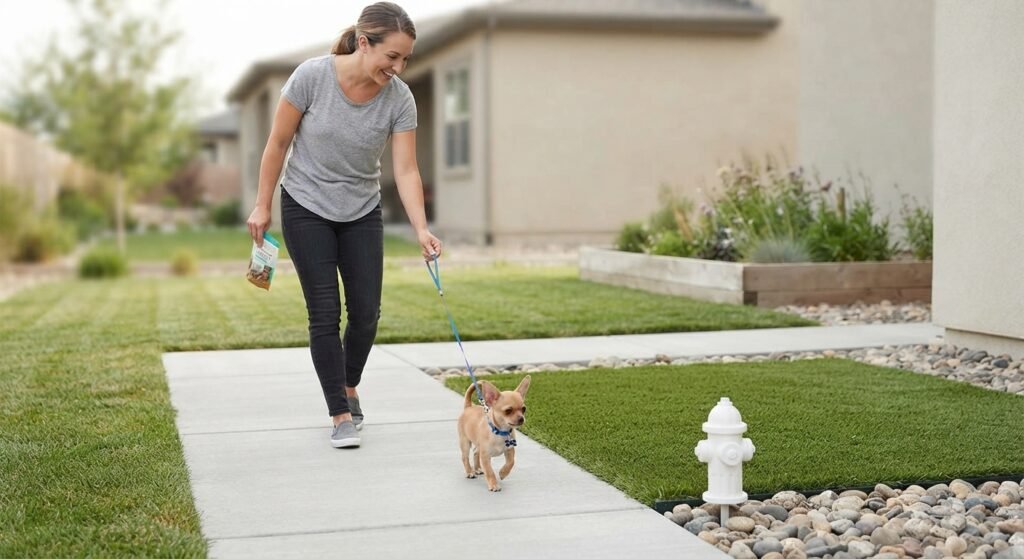
If you plan to train your Chihuahua to use the outdoors, take them to the same general area whenever possible.
The familiar smell and location can help your puppy understand the purpose of the trip.
Indoor Potty Training
Some Chihuahua owners choose puppy pads or another indoor setup.
This can be useful in certain living situations, particularly when immediate outdoor access is difficult.
However, decide early what long-term routine you want.
⏰ Step 2: Create a Chihuahua Puppy Potty Schedule
A predictable schedule is one of the most useful tools for Chihuahua puppy potty training.
Take your puppy to the potty area regularly.
Important times include:
-
Immediately after waking
-
After eating
-
After drinking
-
After playing
-
After a nap
-
Before bedtime
-
After exciting activity
-
At regular intervals throughout the day
Young puppies have limited bladder control. Therefore, they need more frequent opportunities to go.
As your puppy grows and develops better control, the schedule can gradually change.
Example Chihuahua Puppy Schedule
| Time | Activity |
|---|---|
| 7:00 AM | Wake up and potty |
| 7:15 AM | Breakfast |
| 7:30 AM | Potty again |
| 9:00 AM | Potty |
| 11:00 AM | Potty and play |
| 1:00 PM | Meal if appropriate + potty |
| 3:00 PM | Potty |
| 5:00 PM | Play + potty |
| 7:00 PM | Evening meal + potty |
| 9:00 PM | Final play and potty |
| Bedtime | Final potty trip |
This is only an example.
Your puppy’s actual schedule should be adjusted for age, feeding routine, health, sleep, and veterinary advice.
👀 Step 3: Watch for Signs Your Chihuahua Needs to Go
Your puppy may show signs before an accident happens.
Watch for behaviors such as:
-
Sniffing the floor
-
Walking in circles
-
Suddenly stopping play
-
Moving toward a corner
-
Whining
-
Scratching at a door
-
Becoming restless
-
Searching for a quiet area
When you notice these signs, take your puppy to the potty area immediately.
The faster you respond, the easier it becomes for your puppy to connect the feeling with the correct behavior.
Don’t Wait for an Accident
A common mistake is waiting until your puppy has already started going.
Instead, learn your puppy’s patterns.
For example, if your Chihuahua usually needs to go shortly after eating, take them outside or to the designated area soon after the meal.
Eventually, the routine becomes familiar.
🗣️ Step 4: Use a Simple Potty Command
Choose one short phrase.
For example:
“Go potty.”
Say it calmly when you arrive at the designated area.
Then wait.
Do not distract your puppy with play.
Once your puppy finishes, immediately offer praise.
You can say:
“Good potty!” ❤️
Your puppy will gradually begin connecting the phrase, location, action, and reward.
🎉 Step 5: Reward Your Chihuahua Immediately
Timing matters.
When your puppy successfully goes in the correct location, reward them immediately.
You can use:
-
Verbal praise
-
Gentle affection
-
A small appropriate training treat
-
A short play session
The reward should happen soon after the behavior.
This helps your puppy understand what they did correctly.
Why Positive Reinforcement Helps
Puppies learn through repeated experiences.
When good behavior produces something pleasant, puppies are more likely to repeat it.
Therefore, make potty training a positive experience.
Do not use fear.
Do not hit your puppy.
Do not yell at them after an accident.
Instead, calmly clean the area and continue the training routine.
🚫 Step 6: What Should You Do When Your Chihuahua Has an Accident?
Accidents are part of puppyhood.
Even puppies that are learning well can have accidents.
If you catch your puppy beginning to go in the wrong place, calmly interrupt them.
Then take them to the correct potty area.
If they finish there, praise them.
What If You Find the Accident Later?
If you discover an accident after it happened, simply clean it.
Do not punish your puppy afterward.
Your Chihuahua is unlikely to understand why they are being punished for something that happened several minutes earlier.
Instead, focus on prevention.
Ask yourself:
Was my puppy unsupervised?
Was it too long since the last potty trip?
Had my puppy just eaten, drunk, played, or woken up?
The answer can help you improve the schedule.
🧼 Step 7: Clean Accidents Thoroughly
Cleaning is important.
If urine or stool leaves a strong odor, your puppy may be encouraged to return to that area.
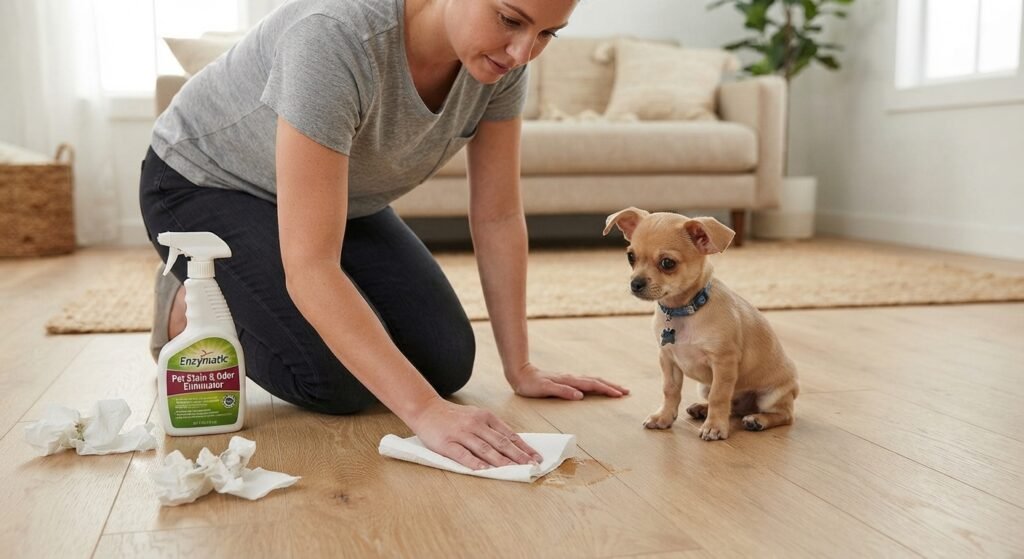
Use an appropriate pet-safe cleaning product designed to remove pet odors.
Clean the affected area thoroughly.
Do not simply cover the smell with a fragrance.
The goal is to remove the odor rather than hide it.
AKC specifically recommends enzymatic urine cleaners when dealing with puppy accidents.
🐕 Step 8: Supervise Your Chihuahua Puppy
Supervision is one of the most effective potty-training tools.
When your Chihuahua is awake and active, keep them where you can see them.
You can use:
-
A puppy playpen
-
A puppy-safe room
-
A crate for appropriate rest periods
-
Close supervision beside you
If you cannot supervise your puppy, use a safe confinement area that has been prepared appropriately.
This reduces opportunities for unwanted accidents.
Why Supervision Works
Every accident inside the house is an opportunity for your puppy to practice the wrong behavior.
Instead, you want to create more opportunities for successful potty trips.
More successful trips mean more opportunities to reward the behavior you want.
🏡 Step 9: Make Your Home Puppy-Friendly
Before starting Chihuahua puppy potty training, prepare your home.
Remove anything that could create unnecessary problems.
Keep your puppy away from:
-
Unsafe household chemicals
-
Electrical cords
-
Small objects
-
Human medications
-
Toxic foods
-
Unsecured stairs
-
Unsafe balconies
Toy breeds can also be vulnerable to accidental injuries because of their small size. AKC recommends safety measures such as gates around stairs and careful supervision around furniture and larger dogs.
💤 Step 10: Understand the Role of Sleep
Puppies need plenty of rest.
After sleeping, your Chihuahua will often need a potty opportunity.
Therefore, make “wake up → potty” part of your routine.
This applies after:
-
Morning sleep
-
Afternoon naps
-
Crate rest
-
Quiet periods
A simple routine makes potty training easier to remember.
🧸 Crate Training and Potty Training
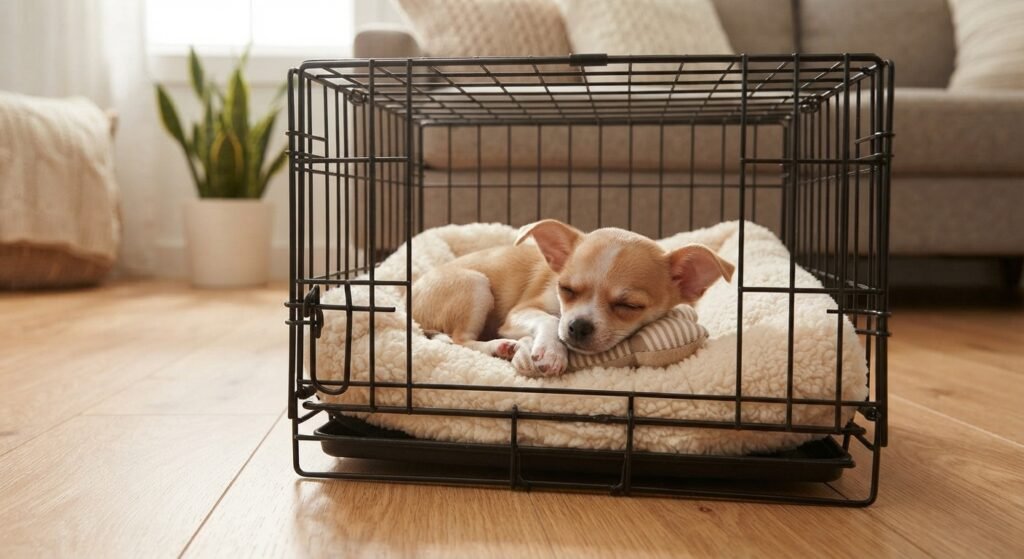
Crate training can support potty training when used correctly.
A crate should be a safe resting area.
It should never be used as punishment.
Your puppy should have enough room to stand, turn around, lie down, and rest comfortably.
Introduce the crate gradually.
Make it positive.
For example, provide a comfortable bed or appropriate toy and allow your puppy to enter voluntarily.
AKC recommends beginning crate training early and using positive experiences rather than allowing the crate to become associated with fear or distress.
🌙 How to Potty Train a Chihuahua Puppy at Night
Nighttime potty training can be one of the hardest parts for new puppy owners.
However, a consistent bedtime routine can help.
Before bed:
-
Finish calm play.
-
Give your puppy the appropriate evening meal according to their feeding plan.
-
Allow a final potty trip.
-
Keep the environment quiet.
-
Put your puppy in their designated sleeping area.
If your young puppy wakes during the night and appears to need the bathroom, take them calmly to the potty area.
Keep nighttime trips boring.
Do not turn them into playtime.
After your puppy finishes, return them to bed.
As your puppy matures, nighttime potty needs may change.
🐾 How Long Does Chihuahua Potty Training Take?
There is no exact number of days that works for every Chihuahua.
Some puppies learn quickly.
Others need more time.
Age, routine, previous experience, health, environment, and consistency can all influence progress.
Therefore, avoid comparing your puppy with another dog.
Instead, look for gradual improvement.
For example:
Week 1: Frequent accidents may occur.
Week 2: Your puppy begins recognizing the routine.
Week 3: Successful potty trips become more frequent.
Later: Your puppy becomes more reliable and may begin signaling when they need to go.
Progress is the goal.
📅 Chihuahua Puppy Potty Training Progress Chart
You can keep a simple record.
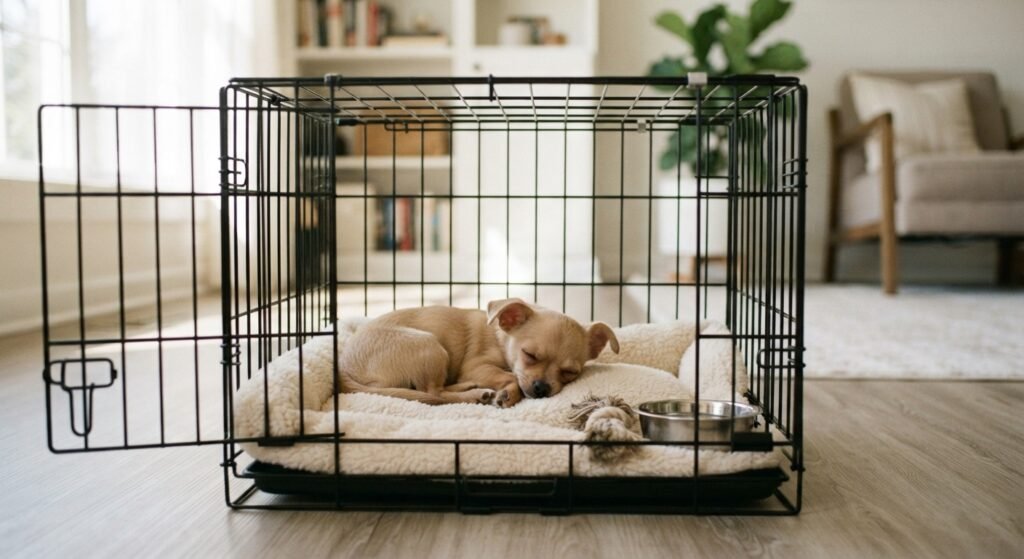
A record helps you identify patterns.
For example, you may discover that accidents happen most often after long play sessions.
You can then add an extra potty trip after play.
🧠 Common Chihuahua Potty Training Mistakes
Even well-meaning owners can make mistakes.
Here are some of the most common ones.
1. Changing the routine constantly
Puppies learn through repetition.
Try to keep the schedule predictable.
2. Punishing accidents
Punishment can create fear and confusion.
Focus on teaching the correct behavior instead.
3. Giving too much freedom too soon
A puppy that has only recently learned one room may not be ready to explore the entire house.
Expand access gradually.
4. Forgetting after-play potty trips
Exciting play can increase the chance that your puppy needs to go.
Always consider a potty trip after active play.
5. Waiting too long
Young puppies may need frequent bathroom opportunities.
Do not expect them to hold it for long periods simply because an older dog can.
6. Not cleaning accidents properly
Remaining odors may encourage repeat accidents.
Clean affected areas thoroughly.
❤️ Be Patient With Your Chihuahua
Potty training requires patience.
Your Chihuahua is not trying to make your home dirty.
Your puppy is learning.
That means mistakes are normal.
Instead of becoming frustrated, focus on what you can control:
Routine.
Supervision.
Timing.
Rewards.
Consistency.
These five things can make a major difference.
🌎 Potty Training and Socialization
Potty training is only one part of raising a confident Chihuahua.
Your puppy also needs safe socialization.
Introduce your Chihuahua gradually to appropriate:
-
People
-
Sounds
-
Household environments
-
Surfaces
-
Car rides
-
Grooming
-
Handling
-
Friendly, suitable dogs
Current AKC guidance emphasizes positive and gradual exposure during puppyhood rather than forcing a puppy into overwhelming situations.
Because Chihuahuas are small, interactions with larger dogs should be carefully managed. Small puppies can be injured accidentally even when another dog is friendly.
🩺 When Potty Problems May Need Veterinary Attention
Sometimes a potty-training problem is not simply a training problem.
If your Chihuahua suddenly begins having frequent accidents after previously doing well, speak with your veterinarian.
Also seek veterinary guidance if your puppy has other concerning symptoms, such as:
-
Repeated vomiting
-
Persistent diarrhea
-
Significant changes in appetite
-
Unusual weakness
-
Signs of pain
-
Difficulty urinating
-
Blood in urine or stool
-
Sudden major changes in bathroom habits
Your veterinarian can determine whether a medical issue may be contributing to the problem.
This is especially important for very young or very small puppies.
✅ Chihuahua Potty Training Checklist
Use this checklist every day:
☐ Take puppy out after waking
☐ Take puppy out after meals
☐ Take puppy out after play
☐ Watch for potty signals
☐ Use the same potty area
☐ Use a simple potty command
☐ Reward successful potty trips
☐ Supervise your puppy
☐ Clean accidents thoroughly
☐ Avoid punishment
☐ Keep a consistent routine
☐ Provide appropriate rest
☐ Increase freedom gradually
☐ Contact your veterinarian about unusual symptoms
🐶 Final Thoughts: How to Potty Train a Chihuahua Puppy
Learning how to potty train a Chihuahua puppy takes time, but you do not have to make the process complicated.
Start with a clear routine.
Take your puppy to the correct potty area regularly.
Watch for signs.
Reward success immediately.
When accidents happen, remain calm and clean the area properly.
Most importantly, be patient.
Your Chihuahua puppy is learning an entirely new way of life. With consistency and positive training, your puppy can gradually develop reliable bathroom habits.
If you are preparing to welcome a Chihuahua into your family, take time to prepare your home before your puppy arrives.
At Chihuahua Hub, you can explore Chihuahua puppies and learn more about caring for these small and loving companions.
Frequently Asked Questions
How long does it take to potty train a Chihuahua puppy?
There is no exact timeline. Puppies develop at different rates. Consistent routines, supervision, and positive reinforcement can help your Chihuahua make steady progress.
How often should I take my Chihuahua puppy out to potty?
Young puppies generally need frequent opportunities, especially after waking, eating, drinking, playing, and sleeping. Your puppy’s exact schedule should be adjusted for age and individual needs.
Should I punish my Chihuahua for having an accident?
No. Punishment can create fear and confusion. Instead, calmly clean the area and improve supervision and scheduling.
Are Chihuahua puppies harder to potty train?
Some small dogs may need more frequent potty opportunities because of their small size. However, individual puppies vary. Consistency is more important than breed stereotypes.
Should I use puppy pads?
Puppy pads can be useful for some households. However, decide whether indoor pads or outdoor potty training fits your long-term routine and remain consistent.
Can crate training help potty training?
Crate training can support a structured routine when the crate is introduced positively and used appropriately. It should never be used as punishment.
What should I do if my Chihuahua suddenly starts having accidents?
If your puppy suddenly develops new or unusual bathroom problems, especially alongside other symptoms, contact your veterinarian to rule out a medical issue.
🐾 About Chihuahua Hub
Chihuahua Hub is dedicated to helping families learn more about Chihuahua puppies and responsible puppy care.
Whether you are researching Chihuahua ownership or preparing to welcome a puppy home, our goal is to provide useful information to help you make informed decisions.
Explore our Chihuahua categories and puppy resources to learn more.
This article provides general educational information and is not a substitute for veterinary advice. For health, nutrition, vaccination, or unusual bathroom concerns, consult a qualified veterinarian.