How to Care for a Chihuahua Puppy: Complete 2026 Care Guide! 🐶❤️
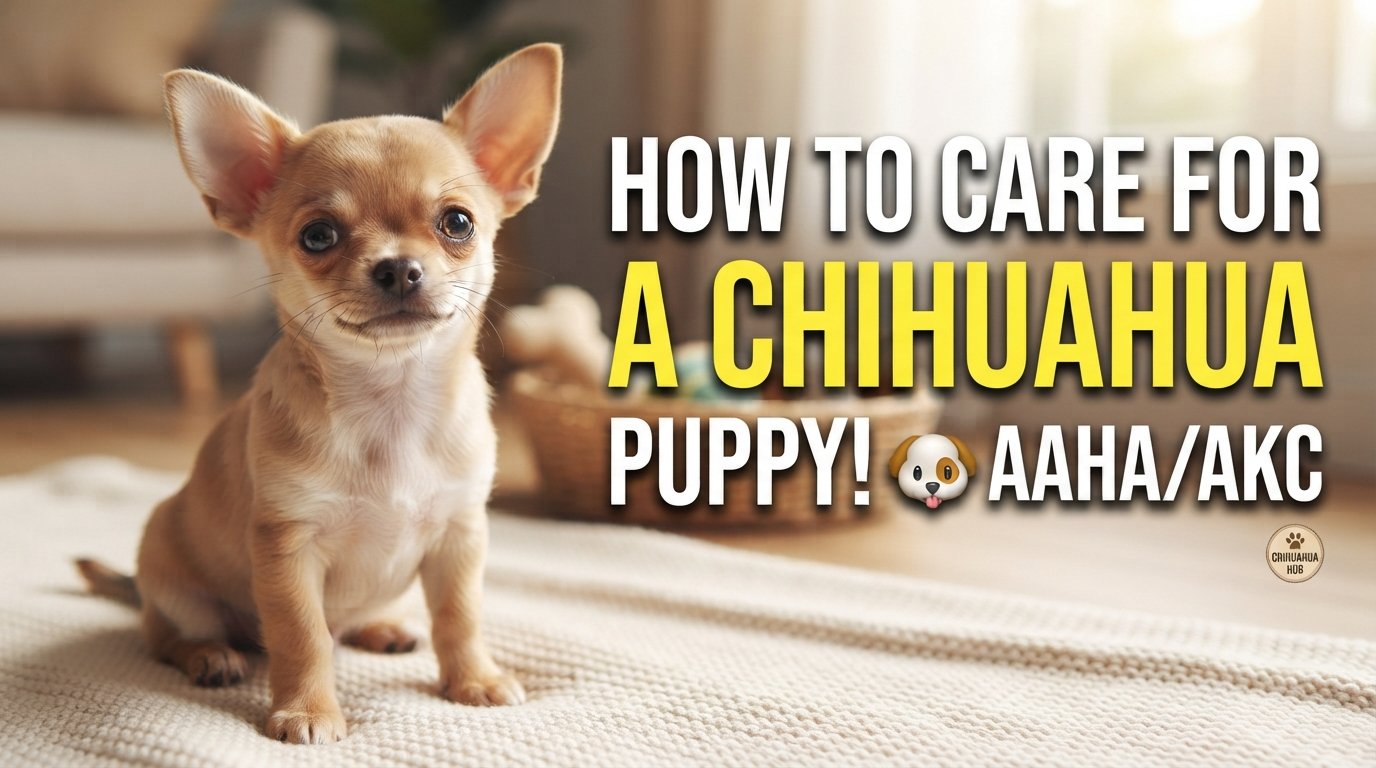
Bringing home a Chihuahua puppy is an exciting experience. However, knowing how to care for a Chihuahua puppy is important from the very beginning. Proper Chihuahua puppy care includes good food, fresh water, gentle training, safe exercise, grooming, socialization, veterinary care, and plenty of love. When you understand how to care for a Chihuahua puppy, you can help your little companion grow into a happy, confident, and well-mannered dog. This complete Chihuahua puppy care guide explains what new owners should know and what to prepare before their puppy arrives.
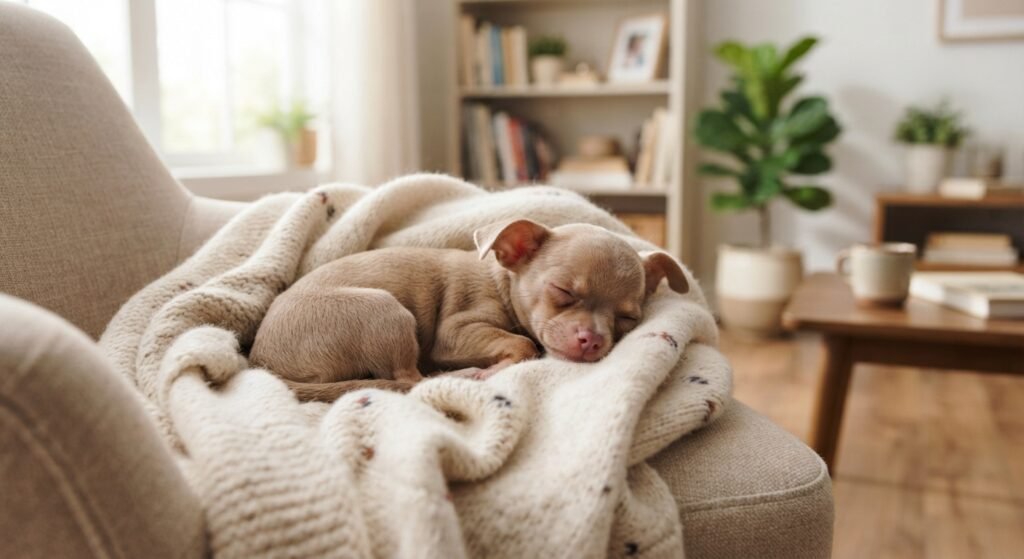
A Chihuahua may be small, but this breed has a big personality. Chihuahuas are intelligent, alert, affectionate, and often very attached to their families. They can also be sensitive because of their small size. Therefore, they need gentle handling and consistent care.
Whether you are preparing for your first Chihuahua puppy or already have one at home, the right routine can make everyday life easier.
🐾 What Does a Chihuahua Puppy Need?
Before your puppy arrives, prepare a safe and comfortable space.
Your basic Chihuahua puppy supplies should include:
| Puppy Essential | Why It Matters |
|---|---|
| Quality puppy food | Supports healthy growth |
| Food and water bowls | Provides easy access to meals and water |
| Comfortable bed | Gives your puppy a safe place to rest |
| Small collar or harness | Helps with safe identification and walks |
| Leash | Supports controlled outdoor exercise |
| Puppy-safe toys | Provides play and mental stimulation |
| Training treats | Makes positive training easier |
| Grooming brush | Helps maintain a clean coat |
| Puppy pads | Can help during house training |
| Enzymatic cleaner | Helps clean potty accidents properly |
| Identification tag | Helps identify your puppy if they become lost |
It is also wise to puppy-proof your home. Remove small objects, exposed wires, harmful household products, and anything your puppy might chew or swallow.
Because Chihuahuas are very small, pay special attention to stairs, high furniture, and large dogs. A fall or rough interaction can cause serious injury in a tiny puppy. AKC also recommends precautions such as gates, ramps, and careful supervision for toy breeds.
🏠 Create a Safe Space for Your Chihuahua Puppy
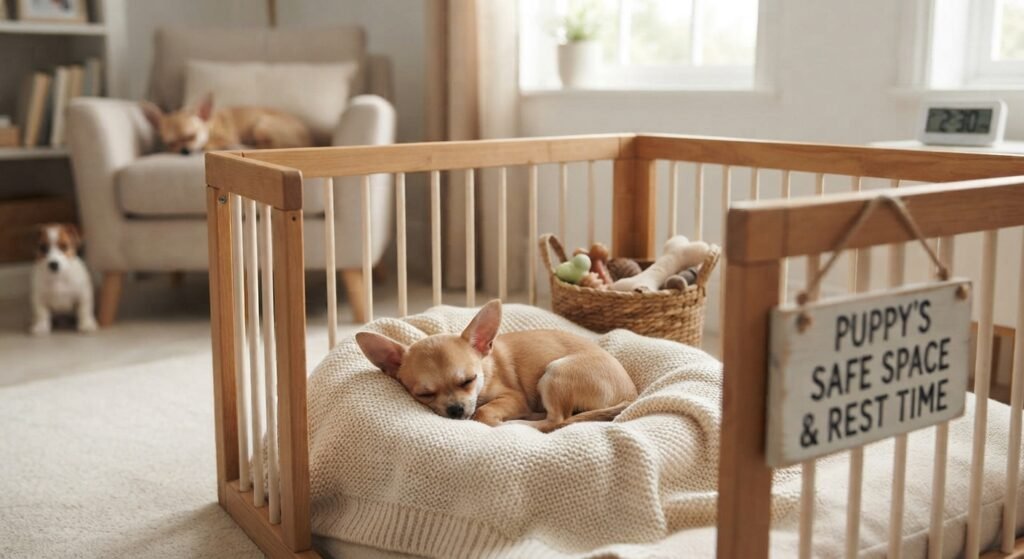
Your puppy should have a quiet area where they can sleep and relax.
A crate, playpen, or small puppy-safe room can work well. The space should be comfortable, clean, and free from hazards.
At first, your puppy may need time to adjust. Therefore, avoid overwhelming them with too many people, loud sounds, or constant handling.
Instead, create a predictable routine.
For example:
Morning → Potty → Breakfast → Play → Rest
Afternoon → Potty → Meal → Training → Rest
Evening → Potty → Play → Calm time → Bed
A consistent routine helps your puppy understand what happens next.
How Much Sleep Does a Chihuahua Puppy Need?
Puppies sleep a lot because their bodies and brains are developing.
Your Chihuahua puppy may sleep for many hours throughout the day. So, do not assume your puppy is bored simply because they spend a lot of time resting.
Give your puppy opportunities to play and learn. However, also allow plenty of quiet sleep.
🍽️ Feeding Your Chihuahua Puppy
Nutrition is one of the most important parts of Chihuahua puppy care.
Choose a complete and balanced puppy food that is appropriate for a small or toy breed. Because puppies grow quickly, they need nutrition that supports healthy development.
Avoid suddenly changing your puppy’s food. If you need to change diets, speak with your veterinarian about the best approach.
Small puppies also have small stomachs. Therefore, meals are usually divided into several smaller portions rather than one large meal.
Your veterinarian can help you determine the right amount based on your puppy’s age, size, activity level, and individual needs.
AKC notes that puppies of different sizes have different nutritional needs, which is particularly relevant when feeding a tiny breed such as the Chihuahua.
💧 Always Provide Fresh Water
Fresh drinking water should be available throughout the day unless your veterinarian gives you different instructions.
Wash the water bowl regularly and replace the water with clean, fresh water.
If your puppy suddenly stops drinking, seems weak, vomits repeatedly, or shows other concerning symptoms, contact your veterinarian promptly.
🩺 Veterinary Care and Vaccinations
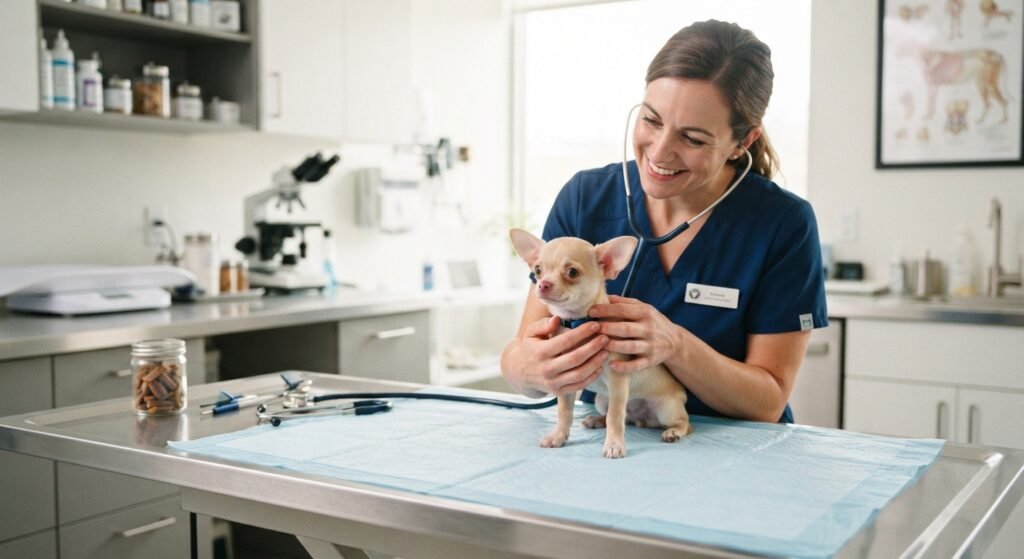
A new Chihuahua puppy should have appropriate veterinary care.
Your veterinarian can evaluate your puppy’s general health and create a personalized vaccination, parasite-control, nutrition, and wellness plan.
Vaccination schedules can vary depending on age, health, lifestyle, location, and other factors. Therefore, do not rely on a generic schedule from the internet.
The American Animal Hospital Association’s canine vaccination guidelines identify core vaccines and explain that recommendations should be personalized according to the individual dog’s needs and risk factors.
What Should Your First Vet Visit Include?
Depending on your puppy’s age and history, your veterinarian may discuss:
-
Physical examination
-
Vaccination history
-
Future vaccinations
-
Parasite prevention
-
Deworming
-
Nutrition
-
Dental care
-
Spay or neuter planning
-
Microchipping
-
Training and behavior
-
Future wellness visits
Do not diagnose or treat your puppy based only on online information. If something seems unusual, speak with a qualified veterinarian.
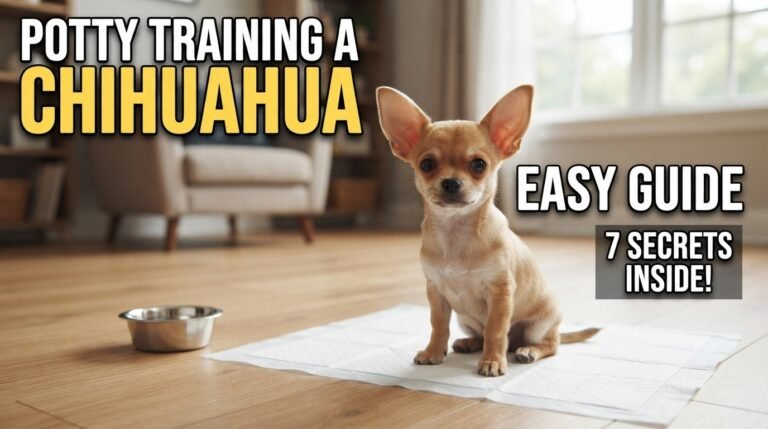
🧻 How to Potty Train a Chihuahua Puppy
Potty training can take patience.
Chihuahuas are intelligent, but small dogs can sometimes require extra consistency during house training. The key is to establish a routine and reward the behavior you want.
Take your puppy to the appropriate potty area:
-
After waking up
-
After eating
-
After drinking
-
After playing
-
Before bedtime
-
At regular intervals during the day
When your puppy goes in the correct place, praise them immediately.
Use a happy voice and offer an appropriate reward.
What If Your Puppy Has an Accident?
Accidents are normal during puppy training.
Do not hit, yell at, or frighten your puppy.
Instead, clean the area thoroughly and continue with the routine.
Your goal is to teach your puppy what you want them to do.
With patience and consistency, your puppy can gradually understand the household routine.
🎓 Start Training Your Chihuahua Puppy Early
Training should begin as soon as your puppy is ready for age-appropriate learning.
Start with simple commands such as:
-
Sit
-
Come
-
Stay
-
Leave it
-
Down
-
Name recognition
Keep training sessions short and positive.
Because puppies have limited attention spans, several short sessions can work better than one long session.
Chihuahuas are intelligent and can respond well to positive training methods. AKC recommends early training and notes that Chihuahuas can learn a variety of behaviors and even participate in activities such as obedience and agility.
Positive Reinforcement Works Best
When your puppy performs the desired behavior, reward them.
Rewards can include:
-
Small training treats
-
Praise
-
Gentle affection
-
A favorite toy
Avoid harsh punishment.
Instead, redirect unwanted behavior and reward good choices.
This approach can help build trust between you and your Chihuahua.
🌎 Socializing Your Chihuahua Puppy
Socialization is another major part of raising a confident Chihuahua.
A well-socialized puppy learns that different people, sounds, environments, surfaces, and experiences can be normal parts of life.
However, socialization does not mean forcing your puppy to greet everyone.
Instead, introduce new experiences gradually.
For example, your puppy can become familiar with:
-
Different household sounds
-
Car rides
-
Gentle handling
-
Different floor surfaces
-
New people
-
Appropriate dogs
-
New environments
Always consider your puppy’s vaccination status and your veterinarian’s advice when deciding where your puppy can safely go.
AKC specifically notes that small dogs benefit from socialization and that interactions with larger dogs should be carefully supervised because of the risk of accidental injury.
🧸 Choosing Safe Toys for a Chihuahua Puppy
Chihuahua puppies love to play.
However, because their mouths and bodies are small, choose toys carefully.
Look for toys that are:
-
Appropriate for small puppies
-
Durable
-
Easy to carry
-
Free from easily detached pieces
-
Suitable for supervised play
Always inspect toys regularly.
If a toy becomes damaged, remove it.
Never assume a toy is safe simply because it is marketed for dogs.
✂️ Grooming Your Chihuahua Puppy
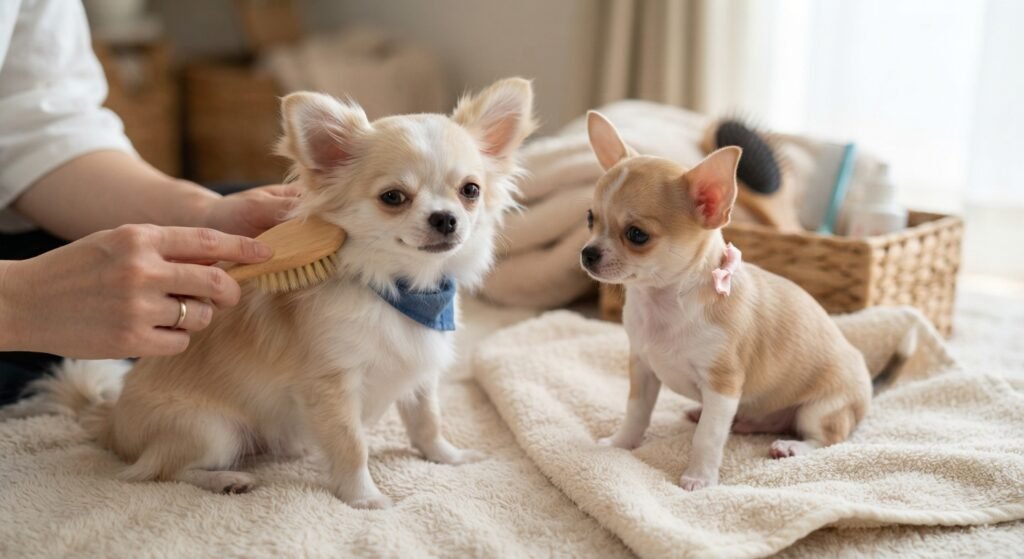
Chihuahuas come in smooth and long coat varieties. Their grooming needs can therefore differ.
Smooth-coated Chihuahuas generally require less brushing.
Long-coated Chihuahuas need more regular brushing to help prevent tangles and mats.
AKC identifies smooth and long coats as the two Chihuahua coat varieties and recommends different grooming approaches according to coat type.
Basic Chihuahua Grooming Routine
A simple routine can include:
-
Gentle brushing
-
Checking the ears
-
Keeping nails at an appropriate length
-
Regular bathing when needed
-
Dental care
-
Checking the coat and skin
Start grooming slowly.
Give your puppy praise during each session.
That way, grooming can become a normal and positive experience.
🦷 Do Not Forget Chihuahua Dental Care
Dental care is especially important for small dogs.
Begin teaching your puppy that mouth handling is normal.
Use products recommended by your veterinarian and follow their advice about brushing and professional dental care.
Never force your puppy through a stressful dental routine.
Instead, introduce it gradually.
For example:
Touch lips → Touch teeth → Introduce toothbrush → Short brushing session → Reward
Small steps can make the experience easier.
🐕 Exercise for a Chihuahua Puppy
Chihuahuas are small, but they still need appropriate physical and mental activity.
However, puppies should not be pushed into excessive exercise.
Short play sessions, gentle walks when appropriate, and simple training games can provide enrichment.
Mental exercise matters too.
Try simple activities such as:
-
Name games
-
Treat searches
-
Basic obedience
-
Puzzle toys
-
Gentle indoor play
Remember, your Chihuahua does not need to run long distances to stay happy.
Instead, focus on age-appropriate activity and plenty of rest.
🌡️ Keep Your Chihuahua Puppy Comfortable
Because of their small size, Chihuahuas can be sensitive to their surroundings.
Pay attention to temperature and comfort.
During cold weather, your puppy may need extra protection.
During hot weather, avoid excessive heat and provide access to shade, water, and a comfortable indoor environment.
Never leave a puppy unattended in a hot vehicle.
Also, remember that small puppies can become injured easily. Supervise them around stairs, furniture, children, and larger pets.
❤️ Understanding Chihuahua Behavior
Chihuahuas are often affectionate and strongly attached to their owners.
They can also be alert and vocal.
Some puppies may bark when they hear unfamiliar sounds or meet strangers.
Instead of simply shouting “No,” try to understand why your puppy is barking.
Is your puppy:
-
Excited?
-
Frightened?
-
Seeking attention?
-
Alerting you to something?
-
Overstimulated?
Once you understand the cause, you can work on an appropriate training response.
Early training and socialization can help your Chihuahua become more confident.
👨👩👧 Are Chihuahuas Good Family Dogs?
Chihuahuas can be loving companions.
However, their tiny bodies mean that interactions with young children should be supervised carefully.
Children should learn how to handle a small dog gently.
Do not allow rough play, chasing, pulling, or grabbing.
Likewise, teach your puppy to respect personal space.
A calm relationship between children and dogs starts with supervision, boundaries, and education.
AKC notes that Chihuahuas can be affectionate companions but warns that their small size makes roughhousing particularly risky.
🛡️ Chihuahua Puppy Safety Checklist
Before leaving your puppy alone, check the environment.
Keep Away From:
-
Electrical wires
-
Small objects
-
Toxic household products
-
Human medications
-
Unsafe foods
-
Open stairways
-
Unsecured balconies
-
Extremely hot or cold areas
-
Aggressive or overly energetic animals
Also, make sure doors and gates are secure.
Chihuahuas are small enough to escape through surprisingly small openings.
📝 Chihuahua Puppy Daily Routine
A predictable daily schedule can make puppy care easier.
| Time | Activity |
|---|---|
| Morning | Potty, breakfast, gentle play |
| Mid-morning | Training and rest |
| Afternoon | Potty, meal if appropriate, play |
| Late afternoon | Short training or enrichment |
| Evening | Meal, calm play, potty |
| Bedtime | Final potty and quiet sleep |
You can adjust this schedule based on your puppy’s age, feeding plan, sleep needs, and veterinarian’s recommendations.
The most important thing is consistency.
🐶 Choosing the Right Chihuahua Puppy
If you are still looking for a Chihuahua puppy, take your time.
Consider:
-
Puppy temperament
-
Age
-
Coat type
-
Expected adult size
-
Health records
-
Vaccination history
-
Socialization
-
Feeding routine
-
Veterinary records
-
Breeder or seller transparency
-
Transportation arrangements
Do not choose a puppy based only on appearance.
A healthy relationship starts with finding a puppy whose needs fit your household and lifestyle.
At Chihuahua Hub, visitors can explore available Chihuahua puppies by category, including Teacup Chihuahuas, Standard Chihuahuas, Short Coat Chihuahuas, and Long Coat Chihuahuas. (chihuahuahub.shop)
🐾 Teacup vs. Standard Chihuahua
Many people search for very small Chihuahuas.
However, the term “teacup” is commonly used by sellers to describe exceptionally small dogs and should not be treated as a separate official Chihuahua breed.
When considering a very small puppy, focus on health, responsible care, temperament, and veterinary guidance rather than size alone.
If you are interested in different Chihuahua types, you can explore the Chihuahua Hub categories:
❤️ Building a Strong Bond With Your Chihuahua
Good Chihuahua puppy care is not only about food and grooming.
It is also about building trust.
Spend time with your puppy every day.
Talk to them.
Play together.
Practice simple commands.
Take calm walks when appropriate.
Give them a comfortable place to rest.
Most importantly, learn to recognize your puppy’s individual personality.
Some Chihuahuas are outgoing.
Others are cautious.
Some love attention.
Others need more time to feel comfortable.
Respecting those differences can help you build a stronger relationship.
🚨 When Should You Contact a Veterinarian?
As a puppy owner, you should pay attention to changes in your dog’s normal behavior.
Contact your veterinarian if your puppy develops concerning signs such as:
-
Significant loss of appetite
-
Repeated vomiting
-
Persistent diarrhea
-
Difficulty breathing
-
Severe weakness
-
Collapse
-
Serious injury
-
Unusual neurological behavior
-
Signs of severe pain
-
Any other sudden or concerning change
Very young and very small puppies can become unwell quickly. Therefore, it is better to ask your veterinarian when you are concerned rather than wait.
✅ Chihuahua Puppy Care Checklist
Before bringing your puppy home, make sure you are ready.
☐ Puppy food prepared
☐ Fresh water available
☐ Comfortable bed ready
☐ Safe sleeping area prepared
☐ Puppy-proofed home
☐ Toys purchased
☐ Collar or harness prepared
☐ Leash ready
☐ Grooming supplies available
☐ Potty-training supplies ready
☐ Veterinary appointment planned
☐ Vaccination records organized
☐ Emergency veterinary contact saved
☐ Daily routine planned
☐ Family members understand safe handling
🐕 Final Thoughts: How to Care for a Chihuahua Puppy
Learning how to care for a Chihuahua puppy does not have to be difficult.
Start with the basics: provide balanced nutrition, fresh water, safe housing, appropriate exercise, positive training, gentle grooming, early socialization, and regular veterinary care.
Then, build a consistent routine.
Most importantly, remember that your Chihuahua is a dog first. Their small size does not mean they need less love, training, enrichment, or attention.
With patience and responsible care, your Chihuahua puppy can grow into a confident and loving companion. ❤️🐶
If you are ready to welcome a Chihuahua into your family, explore the puppies currently available through Chihuahua Hub and take time to learn about each puppy before making your decision.
❓ Frequently Asked Questions About Chihuahua Puppy Care
How do you care for a Chihuahua puppy?
Provide appropriate puppy nutrition, fresh water, safe housing, regular veterinary care, gentle training, socialization, grooming, exercise, and plenty of rest. A consistent daily routine also helps your puppy adjust.
How often should a Chihuahua puppy eat?
Feeding frequency depends on the puppy’s age, size, health, and individual needs. Ask your veterinarian to recommend an appropriate feeding schedule and portion size.
Are Chihuahua puppies difficult to train?
Chihuahua puppies can learn quickly when training is consistent and positive. Start with short sessions and reward desired behaviors.
How do you potty train a Chihuahua puppy?
Take your puppy to the correct potty area regularly, especially after sleeping, eating, drinking, and playing. Reward successful potty trips and avoid harsh punishment after accidents.
Do Chihuahua puppies need socialization?
Yes. Appropriate socialization helps puppies become familiar with people, environments, sounds, and other dogs. However, interactions should be safe and age-appropriate.
Do Chihuahuas need a lot of exercise?
Chihuahuas need regular physical and mental activity, but puppies should receive age-appropriate exercise rather than excessive activity.
How often should a Chihuahua be groomed?
Grooming depends on the coat. Smooth-coated Chihuahuas generally need less brushing, while long-coated Chihuahuas benefit from more regular brushing to prevent tangles.
When should a Chihuahua puppy see a veterinarian?
Arrange veterinary care according to your puppy’s age, health history, vaccination status, and your veterinarian’s recommendations. Seek veterinary advice promptly if your puppy becomes ill or shows concerning symptoms.
📚 Helpful External Resource
For additional information about canine vaccinations, consult the American Animal Hospital Association’s Canine Vaccination Guidelines.
🐾 About Chihuahua Hub
Chihuahua Hub is focused on connecting families with Chihuahua puppies while providing helpful information for current and future Chihuahua owners.
Our website features Chihuahua puppies in several categories, including Teacup, Standard, Short Coat, and Long Coat Chihuahuas.
This article provides general educational information and is not a substitute for advice from a licensed veterinarian. Every puppy is different, so always consult your veterinarian for personalized health, nutrition, vaccination, and care recommendations.